Incorporate Music and Social Elements
Music has a profound impact on exercise experience and performance. The right workout music playlists for motivation can increase endurance, improve mood, and make time pass more quickly during workouts. Research shows that music with 120-140 beats per minute is optimal for most cardio activities, while strength training might benefit from more varied tempos.
Create different playlists for different types of workouts and moods. Have high-energy songs for intense cardio sessions, steady-tempo music for longer endurance activities, and perhaps more mellow tunes for yoga or stretching. Update your playlists regularly to prevent them from becoming stale, and don’t be afraid to include guilty pleasure songs that genuinely motivate you, regardless of what others might think.
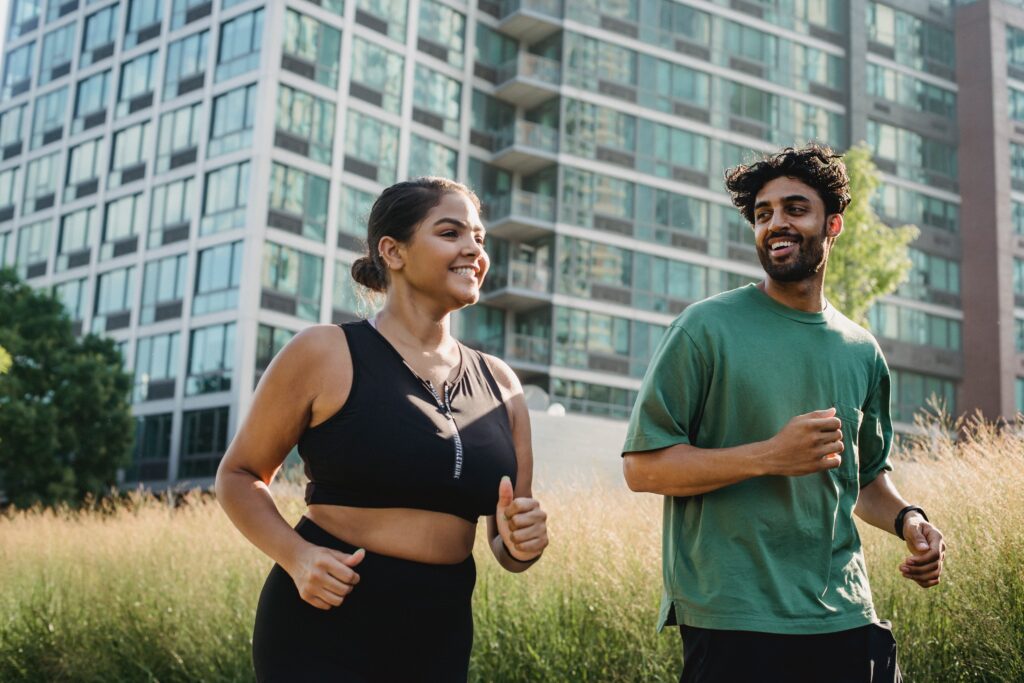
The social aspect of exercise provides both motivation and enjoyment that’s difficult to replicate when working out alone. Group exercise classes near me offer built-in community, instruction, and accountability. Whether it’s yoga, dance fitness, martial arts, or team sports, exercising with others often makes the experience more engaging and helps you push harder than you might on your own.
Some easy social options:
- Walking with a friend
- Group fitness classes for beginners
- Family walks after dinner
- Online challenges or step goals
- hiking clubs
- recreational sports leagues
Set Goals and Celebrate Progress
Exercise goal setting for beginners should focus on process goals rather than just outcome goals. Instead of only focusing on losing a specific amount of weight, set goals like “complete three 30-minute walks this week” or “try two new types of exercise this month.” These process-focused goals give you more control and frequent opportunities for success.
Make your goals specific, measurable, and time-bound, but also ensure they’re realistic for your current situation. Unrealistic goals lead to frustration and abandonment, while achievable goals build confidence and momentum. Start smaller than you think you need to – it’s better to exceed modest goals than to fall short of ambitious ones.
Learning how to stay motivated exercising involves creating a system of rewards and recognition for your efforts. Celebrate fitness milestones both big and small. Completed your first week of regular exercise? Treat yourself to new workout clothes. Achieved a personal best? Share the accomplishment with supportive friends or family. Stuck with your routine for a month? Plan a fun, active outing as a reward.
Track your progress in ways that feel meaningful to you. Some people love detailed fitness apps and data, while others prefer simple journal entries about how exercise made them feel. The key is finding a tracking method that motivates rather than overwhelms you. Focus on celebrating consistency and effort, not just performance metrics.
Instead of: “I need to lose 20kg”
Try: “I’ll walk 20 minutes, 3 times this week” “I’ll move my body most days” “I’ll try one new activity this month”
Use Technology and Gamification
The best fitness apps for motivation transform exercise into an interactive, game-like experience. Many apps offer challenges, achievements, virtual badges, and progress tracking that tap into our natural desire for accomplishment and competition. Some popular options include fitness apps that turn workouts into adventures, step-counting challenges, or programs that unlock rewards as you complete activities.
Wearable devices like fitness trackers or smartwatches can gamify your workout routine by providing real-time feedback, setting daily activity goals, and creating friendly competition with friends or family members. The simple act of trying to close activity rings or reach step goals can transform mundane daily movement into an engaging game.
Virtual fitness challenges for beginners offer structured programs with community support and clear progression paths. These might include step challenges, monthly fitness goals, or seasonal activities that provide variety and motivation. Many of these challenges are free and can be done from home, making them accessible regardless of fitness level or location.
Technology can also provide access to expert instruction and endless variety through online fitness platforms, workout videos, and virtual personal trainers. This removes common barriers like cost, scheduling, and intimidation while providing professional guidance and structured programs.
Mix Things Up to Avoid Boredom
Boredom is one of the fastest ways to kill exercise motivation, making it essential to create varied workout plans for fun and sustained engagement. The human body and mind both crave novelty, and mixing up your exercise routine prevents both physical plateaus and mental staleness.
Plan variety into your weekly schedule by designating different days for different types of activities. Monday might be strength training, Wednesday could be yoga or dancing, Friday might involve outdoor activities, and weekends could be reserved for recreational sports or longer adventures like hiking.
Consider trying fun alternative workouts to try that don’t feel like traditional exercise. Rock climbing, martial arts, dance classes, swimming, recreational sports, or even activities like gardening or playing actively with children can provide excellent fitness benefits while feeling more like recreation than work.
Seasonal variation keeps exercise interesting year-round. Summer might emphasize outdoor activities like hiking, swimming, or cycling, while winter could focus more on indoor classes, home workouts, or seasonal sports like skiing or ice skating. This natural rotation prevents monotony and gives you something to look forward to throughout the year.
Try:
- Walking one day
- Strength or bodyweight exercises another
- Stretching or yoga on busy days
- Something fun on weekends
Even small changes help:
- New walking routes
- Different playlists
- Shorter sessions on low-energy days
Make It Convenient and Easy to Start
Removing barriers to exercise is crucial for consistency. The best convenient workout ideas are those that fit seamlessly into your existing schedule and lifestyle rather than requiring major life reorganization. If getting to a gym is challenging, focus on how to enjoy exercising at home with bodyweight exercises, online classes, or simple equipment.
Create a positive exercise environment that you actually want to spend time in. This might mean investing in comfortable workout clothes that make you feel confident, setting up a dedicated exercise space at home, or finding outdoor locations that you find beautiful or peaceful. The more pleasant you make the experience, the more likely you are to repeat it.
Learning to make exercise part of daily routine involves finding creative ways to integrate movement into activities you’re already doing. Take walking meetings instead of sitting in conference rooms, use stairs instead of elevators, park farther away from destinations, or do bodyweight exercises while watching television.
Timing matters significantly for both convenience and enjoyment. Some people are natural morning exercisers who love starting their day with movement, while others prefer afternoon or evening workouts. Experiment with different times to find when you naturally have the most energy and motivation for physical activity.
Helpful tips:
- Exercise at home if the gym feels intimidating
- Keep workouts short (10–30 minutes is enough)
- Lay out clothes ahead of time
- Choose a time of day that suits your energy
Building Your Personal Fun-Fitness Formula
Finding an exercise routine you enjoy is a personal process, and it’s normal for it to take time and a bit of trial and error. What feels fun or motivating for one person might feel boring or uncomfortable for someone else, and that’s okay. You don’t need to love every workout or feel excited every time you move. Even people who enjoy exercise have off days. The aim is simply to find activities you enjoy often enough that you keep coming back to them.
As you build habits, your preferences may change, and that’s a good thing. What starts as walking might later turn into dancing, strength training, or outdoor adventures. Stay open to trying new things and let your routine evolve with you. Focus on small changes, celebrate your effort, and pay attention to how movement improves your energy, sleep, and mood. The best workout is always the one you’ll actually do, and when it feels even a little enjoyable, you’re setting yourself up for long-term success.
Final Thoughts
You don’t need to love exercise or completely change your life to get healthier. You just need to find ways to move your body that feel manageable, realistic, and suited to you. When exercise stops feeling like punishment and starts feeling supportive, consistency becomes easier and progress follows naturally. Small steps, done regularly, will always beat extreme plans that you can’t sustain.
Give yourself permission to start slow, try different things, and figure out what you enjoy along the way. Some days will feel easier than others, and that’s normal. What matters most is showing up in a way that fits your life right now. The best exercise is the one you’ll actually do — and when it feels even a little bit fun, you’re building habits that can last for life.