It’s 6:30 pm on a Tuesday. You’ve just finished work, you’re tired, and you’re staring into the fridge wondering how on earth you’re going to eat something healthy tonight. Sound familiar?
This is the exact moment that meal prep was invented for.
If you’ve ever thought meal prepping was something only super-organised people with spotless kitchens and three hours to spare on a Sunday could pull off — this guide is going to change your mind. Meal prep for beginners doesn’t have to mean cooking 21 meals in advance or eating the same sad salad five days in a row. It just means doing a little bit of work ahead of time so that future-you has options.
In this guide, you’ll learn exactly how to start meal prepping for weight loss — even if you’ve never done it before, even if you hate cooking, and even if your Sunday is already packed. We’re keeping it simple, realistic, and actually doable.
⚠ Affiliate Disclosure
This post contains affiliate links. If you purchase through my links, I may earn a small commission at no extra cost to you — thank you for supporting SlimStrongSquad!
What Is Meal Prep and Why Does It Help With Weight Loss?
Meal prep just means preparing some or all of your food ahead of time, so you have ready-to-go meals or ingredients when you need them. That’s it. It doesn’t have to be an all-day event.
The reason meal prep works so well for weight loss comes down to one thing: decisions. When you’re hungry and tired, you make very different food choices than when you’re calm and prepared. Studies consistently show that people who plan their meals in advance consume fewer calories and make more nutritious choices overall — not because they’re more disciplined, but because the decision has already been made.
Think of meal prep as removing the friction between you and eating well. Instead of figuring out what to eat when you’re ravenous, you open the fridge and the answer is already there.
A few other reasons meal prep supports weight loss for beginners:
- You control the ingredients — no hidden oils, sauces, or oversized restaurant portions
- You’re less likely to reach for takeaway when dinner is already sorted
- You naturally eat more whole foods and fewer processed options
- It saves money, which reduces stress (which also affects weight loss — more on that later)
The Beginner Mistake: Trying to Prep Everything at Once
Before we get into how to meal prep, let’s talk about the biggest mistake most beginners make: going all-in on day one.
You spend four hours on a Sunday cooking an entire week’s worth of food. By Wednesday, you’re bored of eating the same thing. By Thursday, you’ve abandoned the whole idea. Sound familiar?
Here’s what actually works: start small. You don’t need to prep every meal. Prepping even two to three components per week — a batch of grains, some cooked protein, a few chopped veggies — is enough to make your weeknights dramatically easier.
The Beginner Rule
Start by prepping just your dinners for three nights. Once that feels easy, add lunches. Build the habit gradually rather than attempting a full meal prep marathon on week one.
How to Meal Prep for Weight Loss: A Step-by-Step Beginner System
Step 1: Pick Your Prep Day (and Keep It Short)
Most people choose Sunday, but any day that works for your schedule is fine. The key is consistency — same day, same rough time, every week.
Set a timer for 90 minutes. That’s your session. You’re not cooking a restaurant menu, you’re setting yourself up for the week. With the right approach, 90 minutes is plenty.
Step 2: Plan Three to Five Meals, Not Seven
You don’t need to plan every single meal for the week. Focus on the meals where you’re most likely to make poor choices — for most people, that’s dinner on weeknights and lunch.
Pick three to five dinners and three to five lunches. Write them down. Check what ingredients overlap (if chicken breast appears in two recipes, you only need to cook it once). This is called batch cooking, and it’s where the real time-saving happens.
Step 3: Build Around the ‘Four Components’ Method
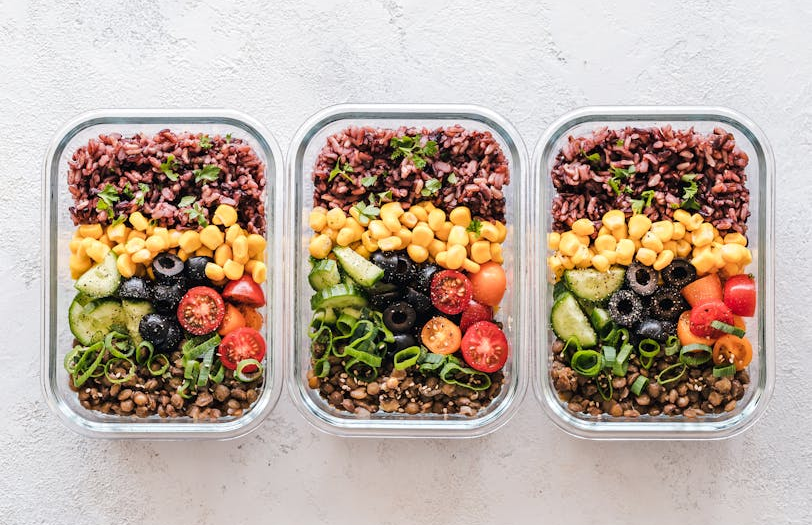
Instead of cooking five separate recipes, prep four flexible components that can be mixed and matched across the week:
- A protein: chicken breast, boiled eggs, canned tuna, tofu, or beef mince
- A complex carb: brown rice, quinoa, sweet potato, or pasta
- A vegetable base: roasted veggies, steamed broccoli, or a big batch of salad greens
- A healthy fat or flavour booster: hummus, avocado, olive oil dressing, or a simple sauce
Mix and match these four components across the week and you’ve got five different meals without cooking five different things. Monday might be chicken, brown rice, roasted veggie bowls. Wednesday might be the same chicken in a wrap with salad and hummus. Thursday could be eggs, sweet potato, and greens. You get the idea.
Our Pick
Having the right containers makes a huge difference. Look for BPA-free, leak-proof meal prep containers with separate compartments so your components stay fresh and don’t get soggy. We recommend checking out Amazon — they stock a great range of meal prep container sets that are microwave and dishwasher safe, making clean-up a breeze.
Step 4: Write a Shopping List Before You Go
This sounds obvious, but it’s the step most beginners skip — and then end up buying random things they don’t use. Write your shopping list based on your planned meals and stick to it.
Group your list by section: produce, proteins, grains and pantry, dairy/fridge extras. This makes the shop faster and reduces impulse buys.
A weekly healthy grocery list for weight loss should include: plenty of vegetables, one to two protein sources, a whole grain, some healthy fats (avocado, olive oil, nuts), and a few flexible extras for snacks. Check out our post on building a healthy grocery list for weight loss for a full printable template.
Step 5: Cook in the Right Order
When you’re actually prepping, the order you cook in matters. Here’s the most efficient flow:
- Start with anything that goes in the oven — roasted vegetables or baked chicken (these take 25–35 minutes and need no attention)
- While the oven is running, cook your grains on the stovetop (rice, quinoa — also low effort)
- Use the remaining stovetop time to cook any proteins that need direct heat (mince, eggs, tofu)
- Wash, chop, and store raw vegetables last — they take the least time and no heat
With this order, you can have four components cooked and cooling within 60–75 minutes, leaving you time to portion and store everything before your 90 minutes is up.
Meal Prep Storage: How to Keep Food Fresh All Week
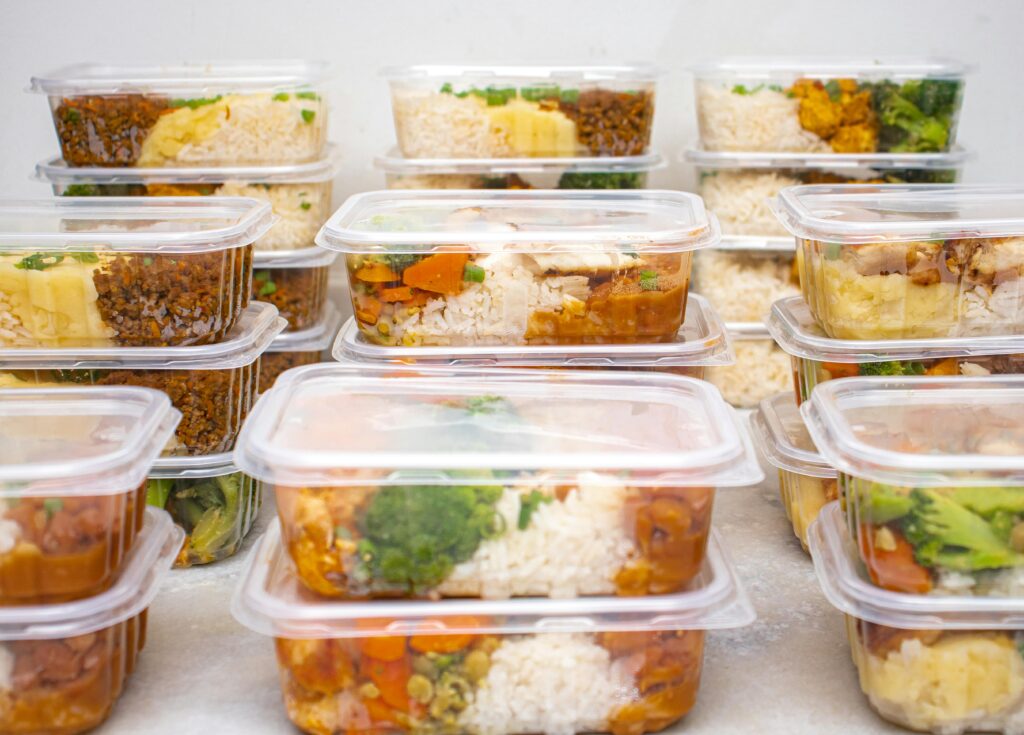
Great meal prep falls apart if your food goes off by Wednesday. Here’s how to store things properly:
- Cooked proteins (chicken, mince, tofu): airtight container in the fridge, good for 3–4 days
- Cooked grains (rice, quinoa): fridge for 4–5 days, or freeze in portions for up to 3 months
- Roasted vegetables: fridge for 3–4 days — they reheat beautifully
- Raw salad leaves: keep dry in a container lined with paper towel, good for 4–5 days
- Sauces and dressings: store separately and add just before eating to prevent sogginess
The golden rule: if you’re not going to eat it within four days, freeze it. Meal prepping a double batch and freezing half is one of the most effective strategies for always having a healthy option on hand.
Easy Meal Prep Ideas for Beginners (No Fancy Cooking Required)
Here are some genuinely simple meal prep ideas that work well for weight loss beginners:
High-Protein Breakfast Prep
- Overnight oats: mix oats, milk, chia seeds, and fruit in a jar the night before — grab and go
- Boiled eggs: cook a batch of 6–8, keep in the fridge, eat with toast or salad
- Greek yoghurt portions: divide a large tub into individual servings with berries and a drizzle of honey
Lunch Prep
- Mason jar salads: layer dressing at the bottom, then grains, protein, and greens on top — keeps fresh for 4 days
- Grain bowls: batch cook quinoa or brown rice, portion with any protein and roasted veggie combos
- Wraps: prep all the fillings and assemble fresh each morning — takes 3 minutes
Dinner Prep
- Batch cook protein: one session of oven-baked chicken breast gives you protein for 3–4 dinners
- Cook a big pot of soup or stew on Sunday — it reheats perfectly and actually improves in flavour
- Prep stir-fry components: slice all your vegetables and store them raw, then cook fresh in 10 minutes
For Beginners Who ‘Hate Cooking’
You don’t have to cook everything from scratch. Rotisserie chicken from the supermarket, pre-washed salad bags, tinned legumes, and microwave rice pouches are all legitimate meal prep shortcuts. Use them without guilt.
Meal Prep for Weight Loss: What to Focus On
Meal prepping for weight loss doesn’t require strict calorie counting or eating like a competitive bodybuilder. Focus on these three things instead:
1. Prioritise Protein
Protein keeps you fuller for longer, supports muscle while you’re losing weight, and reduces cravings. Aim to include a protein source in every meal you prep. Good options include chicken, eggs, Greek yoghurt, cottage cheese, legumes, tofu, and tinned fish.
If you’re finding it hard to hit your protein goals through food alone, a good-quality protein powder can help. iHerb stocks a wide range of options that are affordable and ship to Australia — worth having in your pantry for smoothies or quick high-protein breakfasts.
2. Load Up on Vegetables
You can eat a large volume of vegetables for relatively few calories, which means you feel satisfied without overeating. Roasted vegetables are the easiest thing to batch cook — toss with olive oil, salt, and any seasoning, roast at 200°C for 25–30 minutes, and you’ve got flavourful veggies for the whole week.
3. Keep Portions Realistic
You don’t need to weigh every gram of food to lose weight through meal prep. A simple visual guide: half your plate as vegetables, a quarter as protein, a quarter as complex carbs, and a small amount of healthy fat. Consistent, balanced portions over time are what create results — not perfection on any single day.
For a deeper dive into portioning without obsessive tracking, check out our post on portion control for weight loss.
The Meal Prep Containers You Actually Need
You don’t need a special kitchen or a huge equipment investment to start meal prepping. But having the right containers makes the process significantly easier.
The Basic Kit
- Glass meal prep containers (2–4 cup size): better for reheating, don’t stain or absorb smells
- Smaller containers or jars (250–500ml): perfect for sauces, dressings, snack portions, and overnight oats
- Zip-lock bags or reusable silicone bags: for portioning frozen items and storing chopped raw vegetables
- A large mixing bowl: you’ll use this every single session for tossing salads and vegetables
Amazon AU has a solid range of affordable meal prep container sets — we recommend looking for ones that are microwave-safe, dishwasher-safe, and BPA-free. A set of 10–20 containers in two sizes covers most people’s needs. Links are in our bio.
Common Meal Prep Questions (Answered Honestly)
How long does meal prep take for beginners?
Plan for 60–90 minutes on your first few attempts. As you get familiar with the process, most people can complete a full week’s prep in around an hour. The key is having a plan before you start — don’t go in without knowing what you’re cooking.
Is meal prep better for weight loss than cooking fresh?
Neither is objectively better — what matters is consistency. Meal prep wins for most busy people because it removes the daily decision fatigue around food. When healthy options are ready to go, you’re far more likely to eat them.
Can I meal prep if I have a family with different tastes?
Absolutely. The four-component method works especially well for families — prep the components separately and let everyone assemble their own plates. Kids can have their chicken with plain pasta, while you have yours over greens. Same cook, different meals.
What if I get bored eating the same thing?
Change your sauces and seasonings rather than cooking entirely different meals. The same chicken breast feels completely different topped with salsa versus tahini dressing versus a simple lemon and herb olive oil. Batch cook the basics and rotate the flavours.
Key Takeaways
- Meal prep removes decision fatigue — which is the #1 thing that derails healthy eating on busy weeknights
- Start small: prep just dinners for three nights, not an entire week’s worth of meals
- The four-component method (protein + carb + veggie + fat) gives you flexibility all week without boredom
- Store cooked proteins and grains for 3–4 days; freeze anything you won’t eat within that window
- You don’t need to be a great cook — shortcuts like rotisserie chicken and microwave rice are completely valid
Good containers make the whole process easier — airtight, microwave-safe, and dishwasher-safe are the key features to look for.
Ready to Give Meal Prep a Go?
Here’s the honest truth about meal prep: the first time feels a bit chaotic. You won’t have the perfect system, you might overcook the rice, and you’ll probably forget to buy one ingredient. That’s normal. Do it anyway.
By week three, it’ll start to feel like second nature. By week six, you’ll wonder how you ever managed Monday nights without having dinner already sorted.
You don’t have to be organised, a great cook, or free all Sunday morning. You just have to start. Pick three dinners this week, spend 90 minutes on Sunday, and see how different Tuesday evening feels.
You’ve got this. And we’re right here cheering you on.