BMI and Health: What It Really Means for Your Body
Learn what BMI actually measures, its major limitations, and better ways to assess your health. Stop letting one number define your journey.
If you’ve ever stepped on a scale at the doctor’s office, you’ve probably heard about BMI. Body Mass Index has been used for decades to categorize weight and health. But here’s the truth: BMI causes just as much confusion as it does clarity.
You might be told you’re “overweight” when you feel strong and healthy. Or maybe your BMI falls in the “healthy” range, but you don’t feel your best. This disconnect leaves many women frustrated and wondering what BMI actually means for their health.
BMI is still widely used because it’s quick, easy, and free. Doctors can calculate it in seconds with just your height and weight. But as a tool designed nearly 200 years ago to study populations, not individuals, it has serious limitations that can mislead you about your actual health.
In this article, you’ll understand exactly what BMI measures, why it falls short, and most importantly, what better indicators you should focus on for real, lasting health improvements.
What Is BMI?
BMI stands for Body Mass Index. It’s a simple number that estimates whether your weight is appropriate for your height. That’s it. It doesn’t measure your fitness, your strength, or even your actual body fat.
Think of BMI as a very basic screening tool—like the first question a doctor might ask before digging deeper. It gives a rough snapshot, but it doesn’t tell the whole story of your health.
How BMI Is Calculated
The BMI formula is straightforward:
BMI = weight (kg) / height (m)²
Or in pounds and inches:
BMI = [weight (lbs) / height (inches)²] × 703
For example, if you’re 5’5″ (65 inches) and weigh 150 pounds:
- 150 ÷ (65 × 65) = 0.0355
- 0.0355 × 703 = 24.9
Your BMI would be 24.9, which falls in the “healthy weight” range.
This simplicity is exactly why BMI became so popular. You don’t need expensive equipment or special tests. Just a scale and a tape measure. Within seconds, doctors can get a number that might indicate potential health concerns at a population level.
But here’s where it gets tricky: this formula doesn’t account for what your weight is made of. Muscle? Fat? Water? Bone density? BMI treats all pounds the same.
Why BMI Was Created in the First Place
BMI wasn’t designed for you as an individual. It was created in the 1830s by a Belgian mathematician named Adolphe Quetelet, who wanted to study the “average man” across large populations.
His goal was to find patterns in groups of people—not to assess individual health or fitness. Fast forward to the 1970s, and researchers started using BMI to identify obesity trends in populations and study links between weight and disease risk.
It stuck around because it’s cheap and easy to use on a large scale. Governments and health organizations can track obesity rates across thousands or millions of people without expensive body scans or lab tests.
But what works for tracking population trends doesn’t always work for understanding your personal health journey.
BMI Categories Explained
BMI divides people into categories based on their calculated number. These categories are meant to indicate potential health risks, but they’re far from perfect.
H3: Underweight, Healthy, Overweight, and Obese
Here’s how the standard BMI categories break down:
- Underweight: BMI less than 18.5
- Healthy weight: BMI 18.5 to 24.9
- Overweight: BMI 25 to 29.9
- Obese: BMI 30 or higher
If your BMI falls in the “healthy weight” range, it suggests your weight is proportionate to your height based on population averages. Higher categories indicate increased risk for certain health conditions like heart disease, diabetes, and high blood pressure.
Lower BMI categories can signal undernutrition or other health concerns that need attention.
But here’s what you need to know: these are statistical cut-offs based on large population studies. They don’t account for your individual body composition, muscle mass, age, ethnicity, or lifestyle.
H3: Why These Categories Don’t Tell the Whole Story
Imagine two women, both 5’6″ and 160 pounds. Their BMI would be identical: 25.8—technically “overweight.”
But what if one lifts weights four times a week, has visible muscle definition, and can easily run a 5K? And the other rarely exercises and has higher body fat?
BMI can’t tell them apart. It doesn’t distinguish between fat and muscle. A muscular, fit woman could be categorized as “overweight” while someone with very little muscle but high body fat might fall into the “healthy” range.
BMI also ignores where you carry your weight. Belly fat (visceral fat) is much more dangerous for your health than fat stored in your hips or thighs. But BMI doesn’t measure body fat distribution.
And it completely overlooks your fitness level, daily movement, diet quality, sleep, stress management, and blood markers—all critical components of true health.
The Limitations of BMI
BMI is a starting point, not a diagnosis. Its limitations become obvious when you look at real-life scenarios.
Muscle Mass and Athletic Bodies
Muscle is denser than fat. That means it takes up less space in your body but weighs more. If you’ve been strength training or playing sports, you might weigh more than someone with the same height who doesn’t exercise—but you’ll likely be healthier and leaner.
Professional athletes and fitness enthusiasts are often classified as “overweight” or even “obese” by BMI standards. A woman who lifts weights regularly and has a strong, toned physique could have a BMI over 25, even with low body fat.
This is one of the biggest BMI flaws. It penalizes people who build muscle and improve their fitness. If you’re working hard in the gym and gaining strength, your BMI might go up—but that’s not a bad thing.
Age, Gender, and Body Composition
BMI uses the same formula for everyone, regardless of age or gender. But women naturally have higher body fat percentages than men, and as we age, we lose muscle mass and gain fat more easily.
A BMI of 23 might look very different on a 25-year-old woman versus a 45-year-old woman. Hormonal changes, particularly during perimenopause and menopause, affect how and where your body stores fat.
Older adults may actually be healthier with a slightly higher BMI. Research shows that being at the lower end of “healthy” or even in the “underweight” category can increase health risks as you age, partly because it may indicate muscle loss.
But BMI doesn’t adjust for any of this.
Ethnicity and Genetic Differences
Different ethnic groups carry weight differently and face different health risks at various BMI levels.
For example, people of South Asian descent tend to have higher body fat percentages and greater risk of diabetes and heart disease at lower BMIs compared to white populations. The World Health Organization suggests different BMI cut-offs for Asian populations to better reflect these risks.
Similarly, Black women often have higher bone density and muscle mass, which can result in higher BMIs without the same health risks.
Using one-size-fits-all BMI categories ignores these important genetic and ethnic differences.
BMI and Health Risks
Despite its flaws, BMI isn’t completely useless. When used correctly, it can be a helpful warning sign—but it should never be the only measure of your health.
When BMI Can Be a Useful Warning Sign
At extreme ends of the spectrum, BMI can indicate increased health risks.
A very high BMI (over 30 or 35) often correlates with increased risk of:
- Type 2 diabetes
- Heart disease
- High blood pressure
- Sleep apnea
- Joint problems
- Certain cancers
A very low BMI (under 18.5) may indicate:
- Undernutrition
- Weakened immune system
- Bone loss
- Fertility issues
- Increased risk of complications from illness
These correlations exist because, at population levels, extreme BMIs are often linked to health problems. But correlation doesn’t equal causation for every individual.
You could have a BMI of 32 and have perfect blood pressure, normal blood sugar, and excellent cholesterol levels. Your lifestyle—what you eat, how you move, how you manage stress—matters far more than the number on the scale.
Why BMI Alone Shouldn’t Define Your Health
BMI is like looking at your health through a tiny keyhole. You might see a small piece of the picture, but you’re missing everything else.
Real health is about how you feel, how your body functions, and what’s happening inside—not just what you weigh.
Two women with the same BMI can have completely different health outcomes based on their habits. The woman who eats nutritious foods, moves her body regularly, manages stress, and gets quality sleep will almost always be healthier than someone with the same BMI who does none of those things.
Your blood markers, energy levels, strength, mental health, and quality of life are far better indicators of health than a single number based on height and weight.

Better Ways to Assess Health Than BMI
If you’re serious about understanding your health, you need to look beyond BMI. Here are more accurate and meaningful measures.
Waist Circumference and Body Fat Distribution
Where you carry fat matters more than how much you weigh.
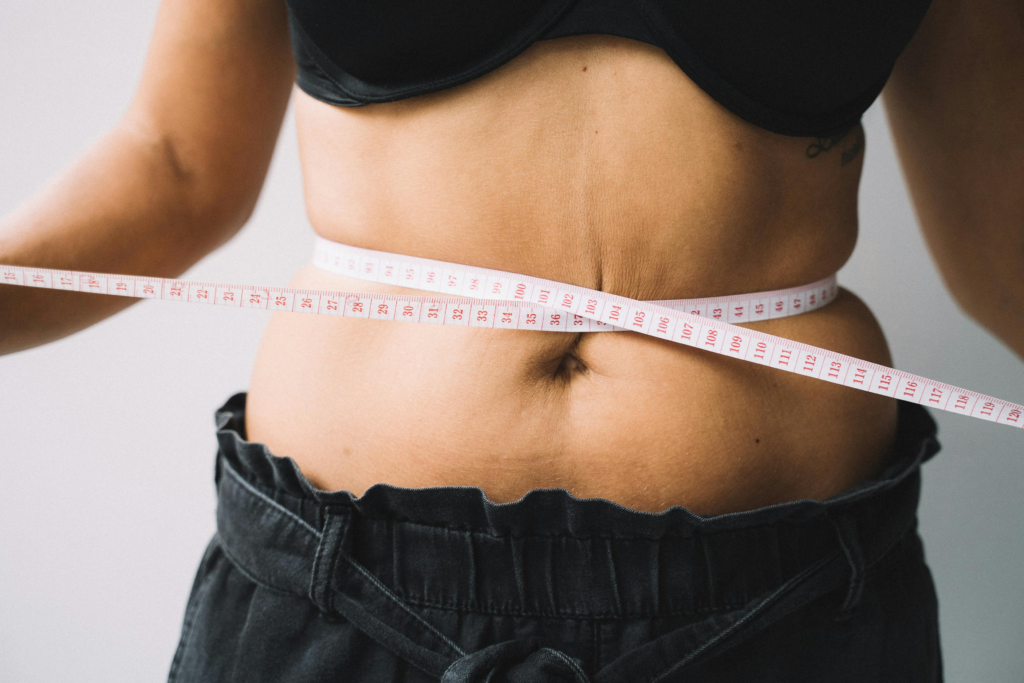
Visceral fat—the fat stored around your organs in your belly—is strongly linked to heart disease, diabetes, and inflammation. Measuring your waist circumference gives you a better sense of this dangerous fat.
For women, a waist circumference over 35 inches indicates increased health risk, regardless of BMI.
You can also calculate your waist-to-hip ratio by dividing your waist measurement by your hip measurement. A ratio over 0.85 for women suggests higher health risks.
These measurements take minutes but give you far more useful information than BMI alone.
Strength, Fitness, and Daily Movement
How strong are you? Can you carry groceries, play with your kids, or climb stairs without getting winded?
Functional fitness—your ability to move well and feel capable in daily life—is a powerful indicator of health. Research consistently shows that cardiorespiratory fitness is one of the strongest predictors of longevity and disease prevention.
You don’t need to run marathons. Simple measures like:
- Can you do a push-up?
- Can you hold a plank for 30 seconds?
- Can you walk briskly for 20 minutes without stopping?
- Can you get up from the floor without using your hands?
These functional tests reveal more about your health than your BMI ever will.
Blood Markers and Metabolic Health
Your blood tells the real story of what’s happening inside your body.
Key markers to monitor include:
- Blood sugar and HbA1c: Indicators of diabetes risk and blood sugar control
- Cholesterol (HDL, LDL, triglycerides): Heart health markers
- Blood pressure: Cardiovascular health
- Inflammation markers (like CRP): Overall inflammation levels
You can have a “healthy” BMI and still have concerning blood markers. Or you can have a higher BMI with excellent metabolic health.
These tests give you actual data about your disease risk and how your lifestyle is affecting your health from the inside out.
How to Use BMI the Right Way
BMI isn’t evil—it’s just limited. Here’s how to think about it without letting it control your journey.
BMI as a Starting Point, Not a Verdict
If your doctor mentions your BMI, don’t panic or ignore it completely. Use it as one piece of information among many.
If you have a high BMI and you’re also experiencing health symptoms, that’s worth exploring. But don’t let BMI define your worth or dictate your entire health approach.
Think of it this way: BMI is like a smoke detector. If it goes off, it’s worth checking for fire. But just because it’s beeping doesn’t mean your house is burning down. And if it’s silent, that doesn’t guarantee everything is perfect.
Use BMI as a conversation starter with your doctor, not as the final word on your health.
Focusing on Habits Over Numbers
The most important shift you can make is moving your focus from the scale to your daily habits.
Instead of obsessing over your BMI, ask yourself:
- Am I eating mostly whole, nutritious foods?
- Am I moving my body regularly in ways I enjoy?
- Am I managing stress and getting enough sleep?
- Am I building strength and taking care of my mental health?
When you prioritize these habits consistently, your body will find its healthiest weight naturally. You might lose fat, gain muscle, improve your energy, and feel amazing—even if your BMI only drops by a few points or stays the same.
Sustainable fat loss and long-term health come from small, daily actions repeated over time. Not from chasing a specific BMI number.
Final Thoughts: BMI Is a Tool, Not Your Identity
Here’s what you need to remember: BMI is a 200-year-old formula designed to study populations, not predict your individual health destiny.
Obsessing over BMI backfires because it keeps you focused on the wrong things. It makes you think you’re failing when you might be building muscle and getting stronger. It ignores your actual health improvements and makes you feel like a number on a chart instead of a whole, complex human being.
What actually drives long-term health and fat loss?
Consistency. Showing up for yourself day after day, even when progress feels slow.
Nourishing your body. Eating enough protein, vegetables, and whole foods to fuel your life.
Moving joyfully. Finding activities you actually enjoy, not just punishing workouts.
Managing stress and rest. Recognizing that sleep, stress, and mental health are just as important as diet and exercise.
Building strength. Both physical and mental resilience that carries you through challenges.
Your BMI might change along the way—or it might not. Either way, you’ll be healthier, stronger, and more confident because you invested in what truly matters.
You are not defined by a number. You’re defined by how you show up for yourself, how you treat your body, and the life you’re building every single day.
FAQs
Can You Be Healthy and Overweight by BMI?
Yes, absolutely. Many people with BMIs in the “overweight” range are metabolically healthy, active, and strong. What matters more than the number is your body composition, fitness level, blood markers, and daily habits. Someone with more muscle mass and healthy lifestyle habits can be far healthier than someone with a lower BMI who is sedentary and has poor metabolic health.
Should I Ignore BMI Completely?
You don’t need to ignore BMI, but you shouldn’t rely on it as your only health measure. Use it as one data point among many. Pay more attention to waist circumference, fitness levels, blood markers, energy, and how you feel in your body. If your BMI is very high or very low, it’s worth discussing with your doctor—but always in the context of your overall health picture.
What’s More Important Than BMI for Weight Loss?
Focus on sustainable habits instead of chasing a specific BMI number. Prioritize eating in a moderate calorie deficit with plenty of protein and whole foods, moving your body regularly (both cardio and strength training), managing stress, sleeping well, and building consistency over time. These habits will improve your health and body composition far more effectively than obsessing over BMI ever will.