If you’ve spent any time reading about weight loss, you’ve probably seen the words “eat more protein” about a thousand times. But knowing you should eat more protein and actually knowing what that looks like across a full week of real meals? Two very different things.
Most high-protein meal plans online fall into one of two camps: overly complicated recipes that require ingredients you’ve never heard of, or unrealistically perfect plans that assume you have two hours and unlimited motivation every single evening. Neither of those is helpful when you’re a beginner just trying to figure out how to eat better without turning your whole life upside down.
This plan is different. It’s built around simple, everyday ingredients you can find at any supermarket, meals that take 30 minutes or less, and enough flexibility that you can swap things around when life gets in the way — because it always does.
By the end of this post you’ll have a complete 7-day high-protein meal plan for weight loss, a snack guide to keep on rotation, and a free printable version you can take straight to the shops. Let’s get into it.
This post contains affiliate links. If you purchase through my links, I may earn a small commission at no extra cost to you — thank you for supporting SlimStrongSquad!
Why Protein Is the Most Important Nutrient for Weight Loss (The Short Version)
Before we get to the plan itself, it’s worth taking two minutes to understand why protein matters so much for weight loss. Once it clicks, the rest of this makes a lot more sense.
It keeps you full for longer
Protein takes longer to digest than carbohydrates or fat, which means it keeps hunger at bay for longer after a meal. It also triggers the release of satiety hormones that signal to your brain that you’re satisfied. The practical result: fewer cravings, less mindless snacking, and an easier time staying within a calorie deficit without feeling deprived.
It protects your muscle while you lose fat
When you eat in a calorie deficit — which is what weight loss requires — your body doesn’t only burn fat for fuel. Without enough protein, it can also break down muscle. Less muscle means a slower metabolism, which makes ongoing weight loss harder and harder. Eating enough protein is essentially your insurance policy against this.
How much protein does a beginner actually need?
A simple starting guide: aim for roughly 1.2 to 1.6 grams of protein per kilogram of body weight per day. So if you weigh 70kg, that’s somewhere between 84g and 112g of protein daily. The meals in this plan are designed to help a woman in that weight range hit around 100 to 120 grams on most days, which is a solid beginner target.
What counts as a high-protein food?
You don’t need anything exotic. The best high-protein foods for beginners are also the most accessible and affordable:
- Eggs
- Chicken breast or thighs
- Tinned tuna and tinned salmon
- Greek yoghurt (plain, full-fat)
- Cottage cheese
- Lentils and chickpeas
- Tofu and edamame
- Protein powder (for smoothies and convenience — not a requirement)
If your meals are built around at least one of these ingredients, you’re already doing the right thing.
How This Meal Plan Works (Before You Dive In)
What to expect from this plan
Each day in this plan is designed to deliver roughly 100 to 130 grams of protein and sit somewhere between 1,600 and 1,900 calories. That’s a reasonable starting range for a woman in a moderate calorie deficit, but it’s not a prescription — adjust portions up or down based on your size and hunger levels.
The meals are simple. Most take under 30 minutes, and several are designed to use leftovers from the night before so you’re not starting from scratch every single meal.
A few things to know before you start
- You don’t have to follow it perfectly. This is a framework, not a rulebook. If a meal doesn’t appeal on a given day, swap it for something else with a similar protein count.
- Meals within the same day are interchangeable. Swap Monday’s lunch for Tuesday’s if you prefer — the plan is flexible by design.
- Portions are a guide. Eat to comfortable fullness, not to the bottom of a container.
- Drink water. Aim for at least 2 litres a day alongside this plan. Hunger and thirst can feel identical, and staying hydrated makes the whole thing easier.
What you’ll need
You don’t need special equipment, but these two things will genuinely make the week easier:
- A digital kitchen scale for accurate portion sizes — it removes the guesswork completely, especially in the first few weeks. A reliable one from Amazon costs around $20–$30 and is one of the most useful things you can add to your kitchen.
- A set of meal prep containers for leftovers and batch cooking. Grab a set on Amazon and you’ll thank yourself by Wednesday.
- Protein powder is optional but handy for the smoothie days in this plan. Look for one with at least 20g protein per serve and minimal added sugar.
Your 7-Day High-Protein Meal Plan for Weight Loss
Each day includes breakfast, lunch, dinner, and one snack. Protein estimates are in brackets — they’ll vary slightly depending on exact portion sizes and brands, but they’re a solid guide.
|
DAY 1 — MONDAY |
|
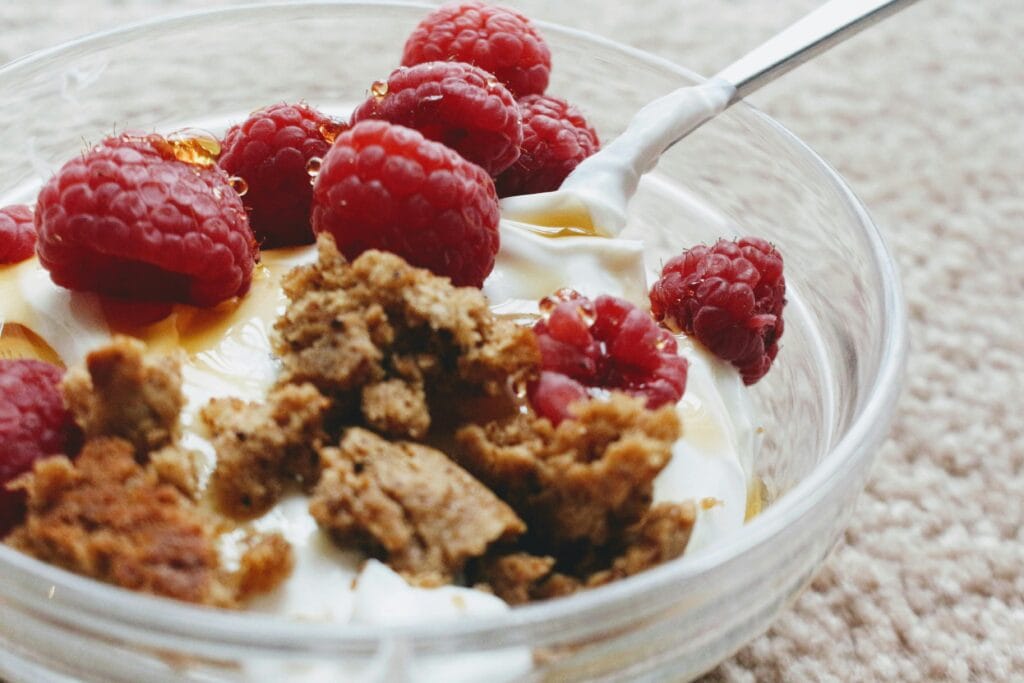
Breakfast Greek yoghurt (200g) with mixed berries and a tablespoon of chia seeds (~18g protein) |
|
Lunch Tinned tuna on wholegrain crackers with sliced cucumber and half an avocado (~25g protein) |
|
Dinner Baked chicken thighs with roasted sweet potato and steamed broccoli (~35g protein) |
|
Snack Two boiled eggs and a small handful of almonds (~15g protein) |
|
Daily total ~93g protein |
|
DAY 2 — TUESDAY |
|
Breakfast Three scrambled eggs on two slices of wholegrain toast (~21g protein) |
|
Lunch Leftover chicken from Monday in a wrap with baby spinach and hummus (~30g protein) |
|
Dinner Salmon fillet with a serve of quinoa and a simple green salad (~38g protein) |
|
Snack Cottage cheese (150g) with a drizzle of honey (~17g protein) |
|
Daily total ~106g protein |
|
DAY 3 — WEDNESDAY |
|
Breakfast Protein smoothie: banana, large handful of spinach, 200g Greek yoghurt, one scoop protein powder, almond milk [iHerb protein link] (~30g protein) |
|
Lunch Lentil and vegetable soup (batch-cooked or tinned) with one boiled egg on the side (~22g protein) |
|
Dinner Beef mince stir-fry with broccoli, capsicum, and brown rice (~35g protein) |
|
Snack Apple with two tablespoons of peanut butter (~8g protein) |
|
Daily total ~95g protein |
|
DAY 4 — THURSDAY |
|
Breakfast Overnight oats (rolled oats, half scoop protein powder, almond milk, frozen berries — prep the night before) (~28g protein) |
|
Lunch Grilled chicken salad with cherry tomatoes, cucumber, feta, and olive oil dressing (~32g protein) |
|
Dinner Baked salmon with roasted vegetables and a small serve of pasta (~36g protein) |
|
Snack Two hard-boiled eggs (~12g protein) |
|
Daily total ~108g protein |
|
DAY 5 — FRIDAY |
|
Breakfast Two-egg omelette with baby spinach, mushrooms, and a sprinkle of shredded cheese (~22g protein) |
|
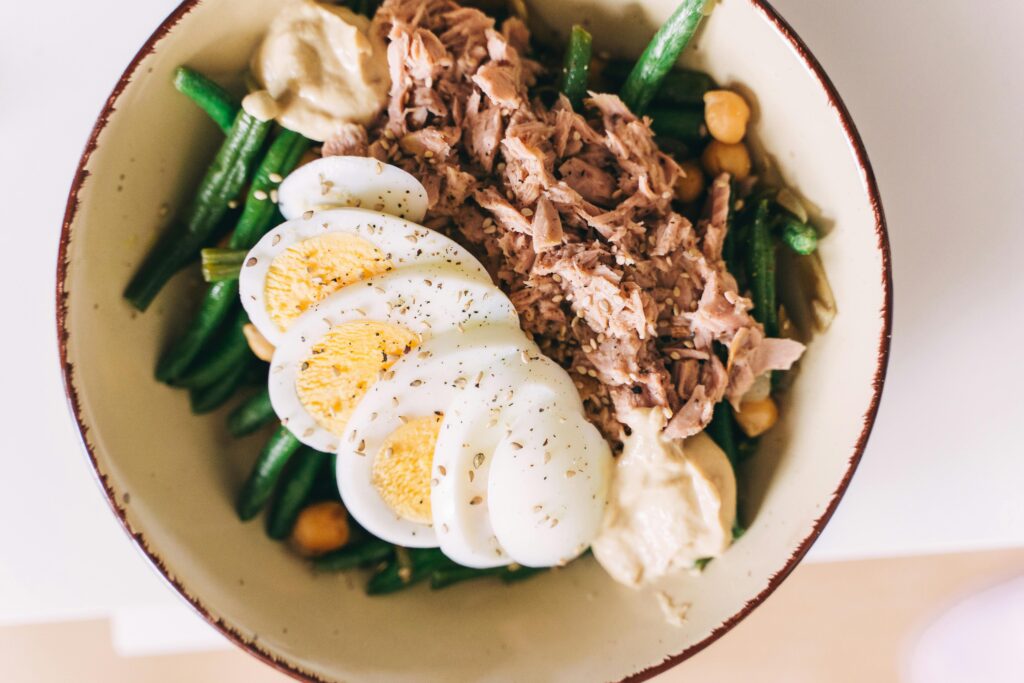
Lunch Tinned tuna and chickpea salad with lemon juice and a drizzle of olive oil (~28g protein) |
|
Dinner Air fryer chicken breast with sweet potato mash and steamed green beans [Amazon AU air fryer link] (~38g protein) |
|
Snack Greek yoghurt (150g) with a small handful of mixed nuts (~18g protein) |
|
Daily total ~106g protein |
|
DAY 6 — SATURDAY |
|
Breakfast Protein pancakes: blend rolled oats, one egg, one banana, half scoop protein powder. Cook and serve with a drizzle of maple syrup. (~28g protein) |
|
Lunch Burrito bowl: brown rice, black beans, grilled chicken, salsa, and Greek yoghurt instead of sour cream (~38g protein) |
|
Dinner Pick any meal from [Post #39 — 5 High-Protein Dinners You Can Make in Under 30 Minutes] (~30–38g protein) |
|
Snack Cottage cheese (150g) with sliced strawberries (~17g protein) |
|
Daily total ~113–121g protein |
|
DAY 7 — SUNDAY |
|
Breakfast High-protein weekend breakfast: two eggs any style, grilled tomatoes, sautéed mushrooms, baked beans, and wholegrain toast (~30g protein) |
|
Lunch Leftover burrito bowl ingredients from Saturday — reheat and serve (~35g protein) |
|
Dinner Slow-cooked beef or red lentil curry with brown rice (~35g protein) |
|
Snack Protein smoothie or two boiled eggs with a piece of fruit (~15–25g protein) |
|
Daily total ~115–125g protein |
Simple High-Protein Snacks to Keep on Rotation
Snacks aren’t a requirement — if you’re genuinely full between meals, skip them. But having a go-to list on the fridge removes the “what can I eat?” decision at 3pm when you’re tired and hungry and the biscuit tin is right there.
These are all easy, high-protein, and require next to no preparation:
- Greek yoghurt (plain, full-fat) with fruit — about 15–18g protein per serve
- Boiled eggs — prep a batch of four or five on Sunday and they’ll last all week
- Cottage cheese with cucumber or berries — often overlooked, genuinely one of the best high-protein snacks going
- Tinned tuna on rice cakes — fast, filling, about 20g protein
- Edamame — frozen bags from the supermarket, microwave in three minutes, about 12g protein per cup
- A protein bar — look for one with at least 10g protein and low added sugar.
- Collagen in your morning coffee or tea — one scoop adds around 10g protein without changing the flavour.
- Peanut or almond butter on wholegrain crackers — about 7–10g protein depending on portions
- A small handful of mixed nuts with a piece of fruit — lower in protein but great for sustained energy
- The Day 3 protein smoothie again — it’s filling enough to work as a light meal or a substantial snack
How to Make This Plan Work for Your Budget
One of the biggest myths about eating high-protein is that it’s expensive. It doesn’t have to be. The most affordable foods on this list are also some of the best protein sources going.
The cheapest high-protein foods
- Eggs — one of the most cost-effective proteins per gram, full stop
- Tinned tuna and tinned salmon — buy in bulk when on special
- Lentils and chickpeas — dried lentils especially are incredibly cheap and easy to batch cook
- Chicken thighs — cheaper than breast, more flavourful, and just as high in protein
- Greek yoghurt and cottage cheese — especially supermarket own-brand versions
- Frozen edamame — much cheaper than fresh, just as nutritious
Three habits that cut your grocery bill without cutting your nutrition
- Batch cook grains and legumes on Sunday. A big pot of lentils or brown rice costs almost nothing and forms the base of three or four meals throughout the week.
- Buy frozen vegetables instead of fresh. They’re frozen at peak nutrition and significantly cheaper — there is no meaningful difference in health value.
- Use tinned fish as your weekday protein default. It requires zero cooking, keeps for months, and costs a fraction of fresh fish or deli meat.
What to Do When You Fall Off the Plan
Here’s the thing about meal plans: life happens. You’ll have a week where Wednesday’s dinner doesn’t happen, or Friday’s lunch is a cheese toastie because you ran out of time, or you eat takeaway on Saturday and feel like you’ve “ruined” the whole thing.
You haven’t. Not even slightly.
Missing one meal, or one day, or even two days in a row does not undo the progress from the rest of the week. The all-or-nothing mindset — where one imperfect choice becomes a reason to scrap everything and start again on Monday — is the single most common reason people don’t see results. Not because they’re not trying hard enough, but because they’re being harder on themselves than the situation calls for.
The only rule worth following here: pick up with the next meal. Not the next day, not next week. The very next meal. That’s it. That’s the whole strategy for getting back on track.
After two to three weeks of eating this way, it stops feeling like a plan you’re following and starts feeling like how you normally eat. That’s the goal — not perfection, but a new normal.
You Don’t Need a Perfect Plan — You Just Need to Start
Eating more protein doesn’t have to mean complicated recipes, expensive ingredients, or turning every meal into a maths equation. It means building most of your meals around a solid protein source — eggs, chicken, fish, yoghurt, lentils — and letting the rest follow from there.
This 7-day plan is your starting point. Use it as a template, adapt it to what you actually enjoy eating, and swap meals around freely. The only thing that matters is that you’re eating well more often than not.
And on the days when it all falls apart? Pick up with the next meal. That’s all.
You’ve got this. Now go grab that free printable and get your grocery list sorted.
KEY TAKEAWAYS
|
• Protein keeps you full, protects muscle, and makes weight loss more sustainable — it’s the most important nutrient for beginners to prioritise • Aim for roughly 1.2–1.6g of protein per kilogram of body weight per day as a starting guide • The cheapest high-protein foods are eggs, tinned fish, lentils, Greek yoghurt, and chicken thighs — no expensive ingredients required • This plan delivers 90–125g of protein per day, spread across simple meals that take 30 minutes or less • You don’t need to follow this plan perfectly — treat it as a flexible framework and swap meals freely • When you fall off, pick up with the very next meal. Progress doesn’t reset after a bad day • Grab the free printable version above for your full grocery list |