If you’ve spent any time Googling how to lose weight, you’ve almost certainly fallen into this rabbit hole. Cardio or weights? Running or lifting? High Intensity Interval Training (HIIT) or resistance training? Everyone seems to have a strong opinion — and most of them contradict each other.
Here’s what nobody tells you upfront: the cardio vs strength training debate is largely the wrong question. What actually drives weight loss is a calorie deficit — eating a little less than your body uses. But how you exercise changes how easy that deficit is to maintain, how your body looks and feels as you lose weight, and how likely you are to actually stick with it long term.
And for women — especially those of us in our 30s, 40s, and 50s — those factors matter enormously. Because the goal isn’t just to lose weight. It’s to feel strong, have energy, and actually enjoy the process enough to keep going.
So let’s cut through the noise. This post breaks down what cardio and strength training each do for fat loss, which one tends to work better for women over 30, and how to build a realistic routine that gets results without burning you out.
⚠ Affiliate Disclosure
This post contains affiliate links. If you purchase through my links, I may earn a small commission at no extra cost to you — thank you for supporting SlimStrongSquad!
What Cardio Actually Does for Fat Loss
Cardio — whether that’s walking, cycling, swimming, running, or a dance class — burns calories while you’re doing it. That’s its primary advantage when it comes to weight loss.
A 45-minute brisk walk might burn 200–300 calories. A 30-minute jog could burn 300–400. Those numbers aren’t huge on their own, but when you add them consistently to a calorie deficit over weeks and months, they make a real difference.
Cardio is also excellent for cardiovascular health, stress reduction, and stamina — none of which should be dismissed. Regular moderate cardio lowers blood pressure, improves mood, and supports better sleep, all of which indirectly support fat loss.
Where cardio works best
- Adding extra calorie burn on top of a nutrition-focused approach
- Improving general fitness and heart health alongside fat loss
- Managing stress — which, as we know, directly affects weight
- Low-impact options like walking and swimming are easier on joints, making them a great starting point for beginners
The catch with cardio, though, is that it doesn’t do much to change your body composition on its own. You can lose weight with cardio, but a lot of that weight loss can come from muscle as well as fat — which affects how your body looks and feels even at a lower number on the scales.
What Strength Training Does for Fat Loss
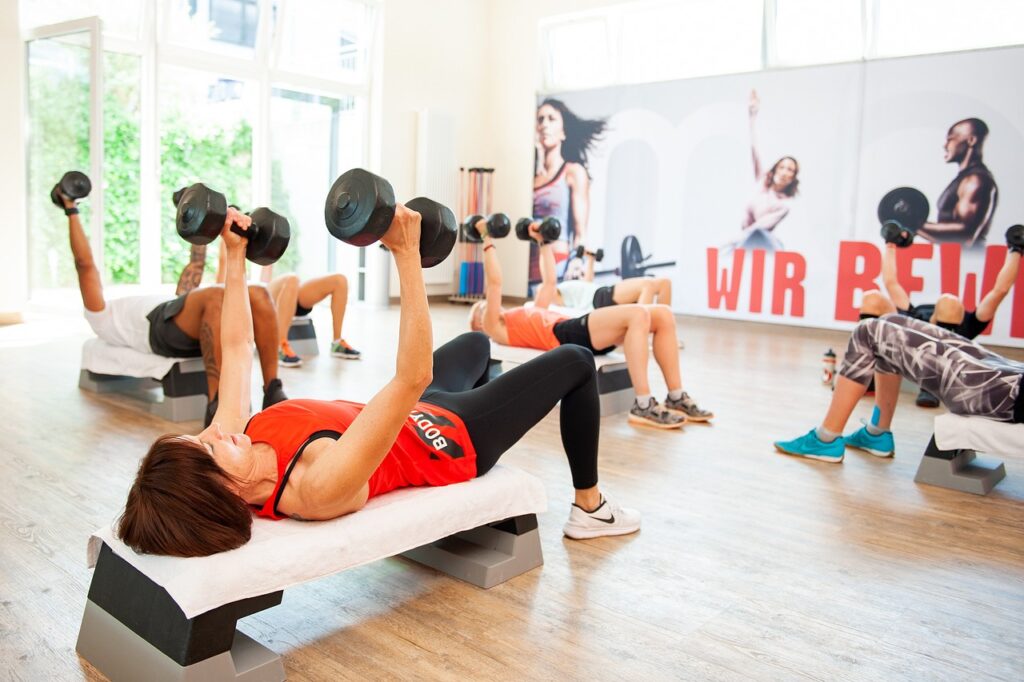
Strength training — also called resistance training or weight training — works differently. During the session itself, it burns fewer calories than cardio. But what it does for your body over time is where the real magic happens.
When you lift weights or do bodyweight exercises, you build and preserve lean muscle. And muscle tissue burns more calories at rest than fat tissue does. So the more muscle you have, the higher your resting metabolic rate — meaning your body burns more calories even when you’re sitting on the couch.
For women in a calorie deficit, this is particularly important. When you cut calories without doing any resistance training, your body can break down muscle for energy alongside fat. You lose weight, but you also lose some of the lean tissue that keeps your metabolism ticking. Strength training helps prevent that.
Where strength training works best
- Preserving lean muscle while losing fat — so you end up smaller and firmer, not just lighter
- Improving body composition even when the scale moves slowly
- Supporting long-term metabolism during and after weight loss
- Building real functional strength — carrying groceries, playing with kids, feeling capable in your body
- Particularly valuable from your 30s onward, when muscle mass naturally starts to decline
You don’t need a gym or a rack of dumbbells to start strength training at home. A set of resistance bands covers most beginner exercises and takes up zero space. They’re one of the best value fitness purchases you can make.
Why the Scale Doesn’t Tell the Full Story
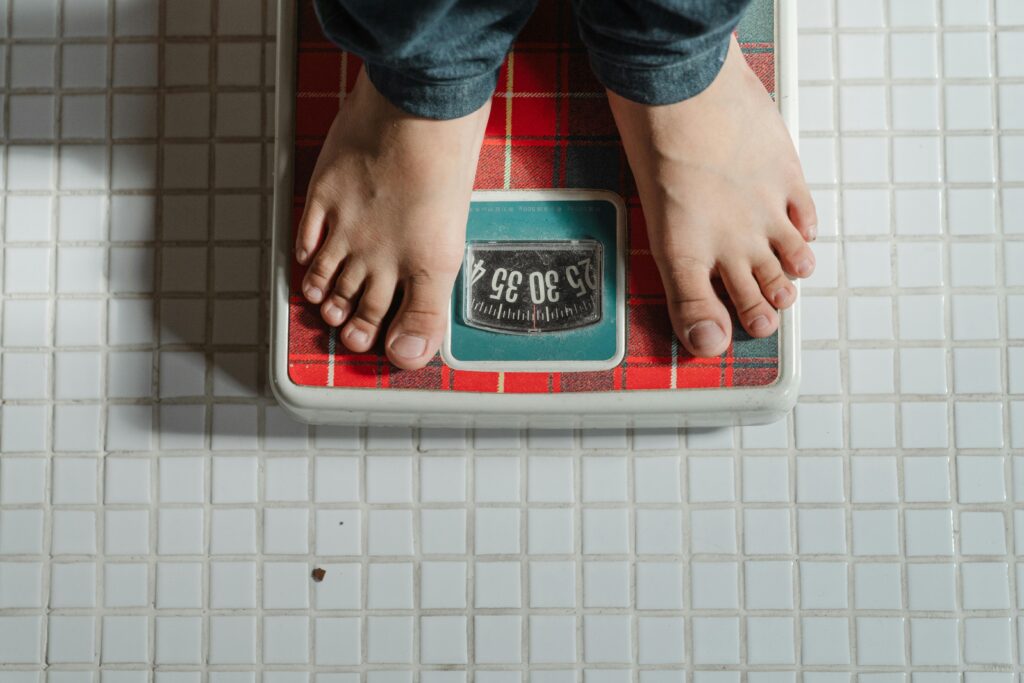
This is the section I really want you to read if you’ve ever started a workout programme, felt stronger and noticed your clothes fitting better — and then felt deflated because the scales hadn’t moved.
Here’s what was probably happening: you were losing fat and building or preserving muscle at the same time. Because muscle is denser than fat, your body can change shape significantly without a corresponding drop in scale weight. You can go down a dress size while staying at the same weight.
This happens a lot when women start strength training for the first time, and it’s one of the most common reasons people quit a programme that’s actually working.
Better ways to measure progress alongside the scales
- Tape measure — waist, hips, and thigh measurements taken every 2–4 weeks
- Progress photos — same lighting, same clothes, same position, once a month
- How your clothes fit — often the first thing you notice before the scale moves
- Energy levels — are you less tired? Sleeping better? That’s progress
- Strength improvements — can you do more reps or a harder variation than last month?
For women in their 40s and 50s particularly, where hormonal changes can cause the body to hold and redistribute weight differently, the scale is an especially unreliable sole measure of progress. Body composition matters more than the number.
Cardio vs Strength Training for Weight Loss: The Honest Answer
Here it is, without the waffle: for long-term fat loss and body composition, strength training tends to come out ahead for most women.
That doesn’t mean cardio is useless. It means that if you can only do one, or you’re deciding where to put your limited time and energy, building a foundation of strength training will generally get you better results over 6–12 months than the same time spent purely on cardio.
The research supports this. Studies comparing cardio-only to resistance training during a calorie deficit consistently show that resistance training preserves more lean muscle, and that people who maintain more muscle during weight loss tend to keep the weight off more successfully afterward.
But the single most important factor — more important than which type of exercise you choose — is which one you’ll actually do consistently. A routine you stick to for six months beats the ‘optimal’ programme you abandon after three weeks.
So which should you choose?
- If you hate the gym and love walking — walk. Walk every day. Add some bodyweight strength work twice a week.
- If you’re returning after a long break — start with what feels manageable and build from there.
- If you’re dealing with joint issues — low-impact cardio (swimming, cycling, walking) plus resistance bands or light weights is a great combination.
- If you have limited time — two or three 30-minute full-body strength sessions per week plus daily steps is one of the most efficient approaches going.
The Best Strategy: Use Both — but Strength First
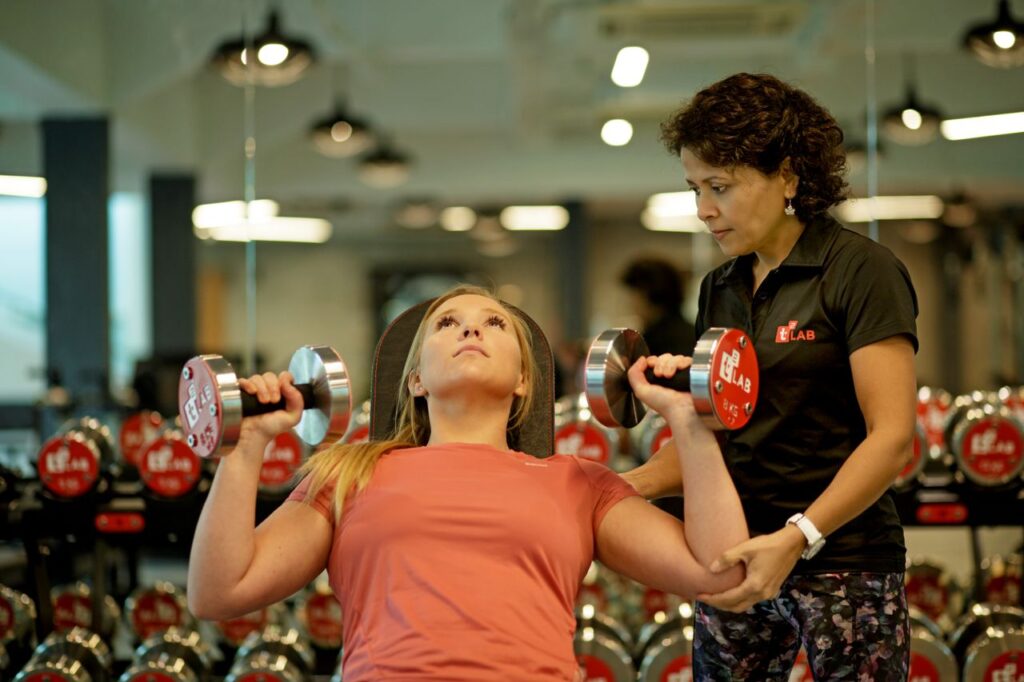
The most effective approach for fat loss, particularly for women over 30, is a combination of strength training and cardio — with strength as the foundation and cardio as a support tool.
Here’s what that can look like in practice, even if you’re starting from scratch:
A simple beginner weekly split
- Monday — 30-minute full-body strength session (bodyweight or light weights)
- Tuesday — 20–30 minute walk or light cardio
- Wednesday — rest or gentle stretching
- Thursday — 30-minute full-body strength session
- Friday — 20–30 minute walk or light cardio
- Saturday — active rest (a longer walk, swimming, whatever you enjoy)
- Sunday — full rest day
This kind of split gives you two to three strength sessions per week — enough to build and preserve muscle — plus regular movement to support your calorie burn and cardiovascular health. It’s also genuinely doable for most busy women, which matters more than any other consideration.
As your fitness improves, you can increase the intensity of your strength sessions, add an extra workout, or swap some of the walks for more structured cardio. But this is a solid foundation to start with.
How to Choose the Right Workout If You’re 30–50
Exercise in your 30s, 40s, and 50s looks and feels a little different to exercise in your 20s — and that’s not a bad thing. Your goals are usually clearer, your tolerance for things you hate is lower (which is actually useful), and you’re more likely to prioritise sustainability over intensity.
A few things are worth keeping in mind as you plan your routine:
Recovery matters more than it used to
If you’re sore for three days after a workout, you went too hard too fast. Your body needs more recovery time as you get older — and that’s fine. Build rest days into your week from the beginning. Getting stronger and leaner is a long game, and consistency over months beats intensity over a fortnight.
Perimenopause changes things — and that’s worth acknowledging
If you’re in your 40s or approaching menopause, you may notice that weight loss feels harder, particularly around your abdomen. Oestrogen changes affect where your body stores fat and how readily it releases it. Strength training becomes especially important during this phase — not just for fat loss, but for bone density, which declines after menopause.
Low-impact cardio (walking, cycling, swimming) is kinder on joints that may be more sensitive during hormonal transitions. And if your sleep is disrupted — a very common perimenopause symptom — be extra patient with your progress, because poor sleep genuinely slows fat loss.
You don’t need to go hard to see results
Two 30-minute strength sessions and 7,000–10,000 steps a day is enough to support meaningful fat loss for most women when paired with a moderate calorie deficit. You don’t need to be destroying yourself in the gym six days a week. In fact, doing that often backfires — it increases cortisol, disrupts sleep, and leads to burnout.
If you’re setting up for home workouts, a pair of light dumbbells and a good mat is all you need to get started. Both are easy to find on Amazon at very reasonable prices.
Common Mistakes That Slow Fat Loss — Whatever Workout You Choose
Doing cardio but eating back the calories
This is the most common one. You go for a 40-minute run, your fitness tracker says you burned 350 calories, and somehow you end up eating an extra 400 calories because you feel like you’ve earned it. The deficit disappears. Exercise is important for health, but it’s much harder to out-train a diet than most people think.
Lifting but never progressing
If you’ve been doing the same three sets of ten with the same light weights for six months, your body has adapted and you’re not getting the stimulus needed to build or preserve muscle. This is called a plateau, and the fix is progressive overload — gradually increasing the weight, reps, or difficulty of your exercises over time.
Doing too much, too soon
Going from zero to six workouts a week in week one is a fast track to injury, exhaustion, and quitting. Two or three sessions a week is genuinely enough at the start. Build the habit first. Add intensity and volume once the routine is solid.
Expecting the scale to drop every single week
Weight loss is not linear. Your weight fluctuates for dozens of reasons — hormones, salt, sleep, hydration, where you are in your menstrual cycle. A week where the scales don’t move is not a failed week. It might be a week where you lost fat but retained water. Judge progress over months, not days.
Frequently Asked Questions
Is cardio or strength training better for belly fat?
Neither specifically targets belly fat — spot reduction isn’t how the body works. But strength training combined with a calorie deficit tends to improve abdominal body composition more effectively over time, particularly in women over 40 where hormonal changes encourage fat storage around the midsection.
Can you lose weight with strength training only?
Yes, absolutely. If you’re in a calorie deficit, you will lose weight regardless of whether you do cardio. Strength training preserves muscle while you do it, which makes the results look and feel better. You don’t need cardio to lose weight — though combining both does tend to speed up the process.
How much cardio do I need for fat loss?
More is not always better. For most women, 150–200 minutes of moderate cardio per week (which could simply be daily walks) is enough to support fat loss when paired with a calorie deficit. Daily steps — aiming for 7,500–10,000 — are one of the most underrated and sustainable forms of cardio going.
How many days of weights should I do to lose weight?
Two to three full-body resistance sessions per week is the sweet spot for most beginners. That’s enough stimulus to build and preserve muscle without requiring so much recovery that it disrupts the rest of your life. You can always add more once you’ve built the habit.
Should I do cardio before or after weights?
If you’re doing both in the same session, do weights first. Strength training requires more focus, coordination, and energy than cardio, so you’ll get more from your lifting when you’re fresh. Save the walk or jog for after.
Key Takeaways
✓ Fat loss comes from a calorie deficit — exercise supports that deficit and changes how your body looks and feels.
✓ Cardio burns more calories during the session; strength training builds muscle that raises your resting calorie burn over time.
✓ For most women over 30, strength training is the better long-term investment for body composition and metabolism.
✓ The best routine is the one you’ll actually stick to — consistency over months beats intensity over weeks.
✓ Combine both: 2–3 strength sessions per week plus regular walking is one of the most sustainable and effective approaches.
✓ The scale is just one data point — measurements, energy, and how you feel matter just as much.
The Bottom Line
Cardio or strength training? For most women who want to lose fat, feel stronger, and actually maintain their results — lean toward strength training as your foundation. But keep moving in whatever way feels good to you alongside it, whether that’s walking, swimming, dancing, or a Saturday morning bike ride.
The best workout is the one that fits your life, matches your energy, and doesn’t make you dread Monday mornings. Start there, be consistent, and let the results follow.
And if you want a simple nutrition approach to pair with your workouts, grab the free 7-Day Kickstart Meal Plan below — it’s designed for exactly this: real food, realistic portions, and no complicated rules.
What to read next?
Resistance Bands for Beginners: The Cheapest Way to Build a Home Gym
The Beginner’s Guide to Working Out at Home: No Gym, No Experience, No Problem
The Truth About Weight Loss: Busting Common Myths That Hold You Back
Best Beginner Cardio Workouts for Weight Loss: Easy, Low-Impact Exercises to Get You Started